Old English sayings share wisdom about life, love, work, family, and human nature.
Many have been passed down through generations, while others come from older forms of English or reflect the values of earlier times.
These short expressions can teach useful lessons in simple words. Some remind us to be patient, while others warn us against pride, dishonesty, or poor choices.
In this collection, you will find old English sayings, their meanings, and ways to use them in everyday life.
Whether you enjoy history, want meaningful quotes, or need words for a card or social media post, these sayings offer timeless lessons worth remembering.
Quick Answer
Old English sayings are short expressions that share wisdom, advice, and lessons about life. Examples include “Actions speak louder than words,” “Better late than never,” and “A stitch in time saves nine.” Many are traditional English proverbs that teach honesty, patience, hard work, and good judgment. Their simple messages remain useful today.
1. Old English Sayings About Life
Life brings change, surprises, and hard choices. These sayings offer simple ways to understand everyday events and make wiser decisions.
- Actions speak louder than words. What you do matters more than what you promise.
- Better late than never. Doing something late is better than not doing it at all.
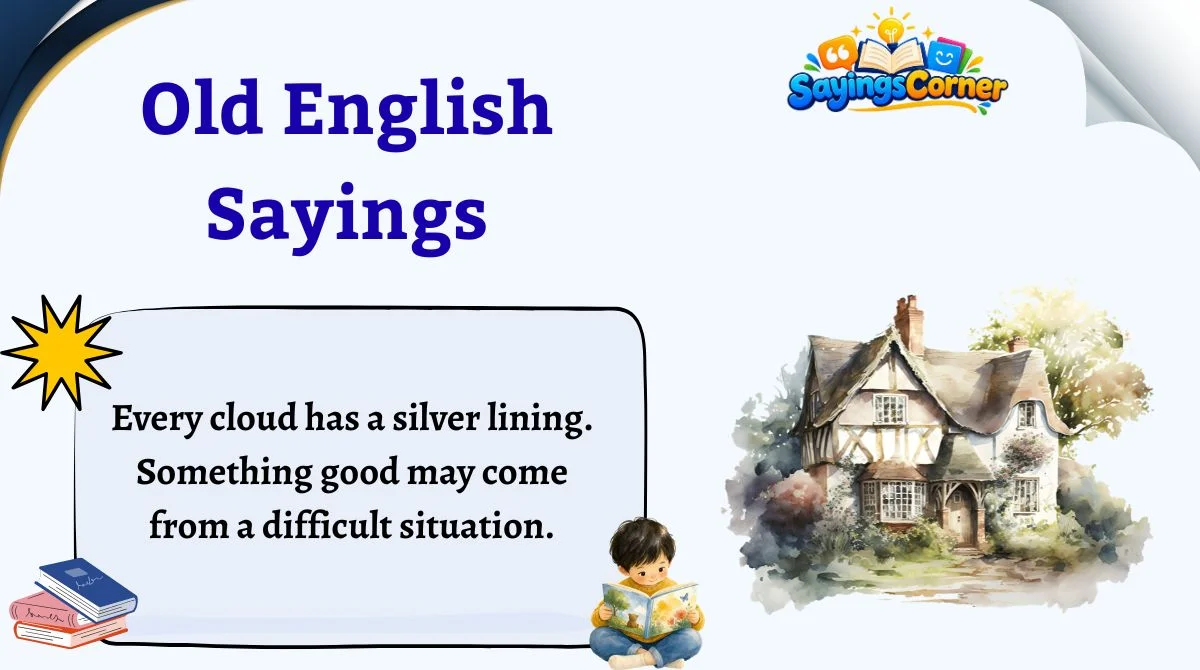
- Every cloud has a silver lining. Something good may come from a difficult situation.
- You cannot have your cake and eat it too. You cannot enjoy two things that cancel each other out.
- Where there is a will, there is a way. Determination can help you find a solution.
- All good things must come to an end. Even happy times eventually finish.
- Make hay while the sun shines. Use a good opportunity while it lasts.
- The best things in life are free. Love, friendship, and happiness do not always cost money.
- Life is what you make it. Your choices help shape your experience.
- Haste makes waste. Rushing can lead to mistakes.
- Live and learn. Every experience can teach you something.
- What goes around comes around. Your actions can have consequences that return to you.
These sayings remind us to stay hopeful, act wisely, and learn from the things life brings our way.
2. Old English Sayings About Wisdom
Wisdom often comes from paying attention, asking questions, and learning from mistakes. These proverbs encourage careful thought before making decisions.
- Look before you leap. Think about the risks before acting.
- A little knowledge is a dangerous thing. Knowing only a small part of a subject can lead to poor choices.
- Experience is the best teacher. Real events often teach lessons that books cannot.
- Two heads are better than one. Working together can lead to better ideas.
- Forewarned is forearmed. Knowing about a problem helps you prepare for it.
- Still waters run deep. Quiet people may have great knowledge or strong feelings.
- The pen is mightier than the sword. Words and ideas can be more powerful than violence.
- A wise man changes his mind; a fool never will. Good judgment includes accepting new facts.
- Fools rush in where angels fear to tread. People without enough thought may take foolish risks.
- Knowledge is power. Learning can help you make better choices.
- An ounce of prevention is worth a pound of cure. Preventing a problem is often easier than fixing it.
- There is no fool like an old fool. Age alone does not guarantee good judgment.
These sayings encourage us to stay curious, think carefully, and remain open to learning throughout life.
3. Old English Sayings About Hard Work
Hard work has long been seen as a path to success. These sayings praise effort, preparation, patience, and the value of doing a job well.
- A stitch in time saves nine. Fixing a small problem early can prevent a bigger one.
- No pain, no gain. Progress often requires effort and discomfort.
- Practice makes perfect. Regular practice helps you improve a skill.
- The early bird catches the worm. People who act early may gain an advantage.
- Many hands make light work. A task becomes easier when people share it.
- Rome was not built in a day. Great achievements take time.
- Well begun is half done. A good start makes a task easier to complete.
- Waste not, want not. Using resources wisely helps prevent future shortages.
- He who would climb the ladder must begin at the bottom. Success often starts with small steps.
- No bees, no honey; no work, no money. Rewards usually require effort.
- The harder you work, the luckier you get. Preparation and effort can create more opportunities.
- Strike while the iron is hot. Act when the time is right.
These expressions are useful reminders for students, workers, business owners, and anyone trying to reach a goal.
4. Old English Sayings About Love and Friendship
Love and friendship are important parts of life. Traditional English proverbs often focus on loyalty, kindness, trust, and the people who stand beside us.
- A friend in need is a friend indeed. A true friend helps when times are hard.
- Love is blind. Strong feelings can make people overlook another person’s faults.
- Absence makes the heart grow fonder. Being apart can increase feelings of love.
- Blood is thicker than water. Family relationships are often considered especially strong.
- Birds of a feather flock together. People with similar interests often spend time together.
- Familiarity breeds contempt. Too much closeness can sometimes lead to disrespect.
- Charity begins at home. Kindness should start with those closest to you.
- A good friend is worth more than gold. True friendship is more valuable than wealth.
- One good turn deserves another. Kindness should be repaid with kindness.
- Out of sight, out of mind. People may think less about someone they no longer see.
- Love me, love my dog. Accepting someone often means accepting the things they care about.
- A burden shared is a burden halved. Sharing troubles with someone can make them easier to bear.
These sayings show that strong relationships need care, understanding, and mutual respect.
5. Old English Sayings About Money and Saving
Money has always been part of everyday life. These old proverbs offer advice about saving, spending, wealth, and the risks of being careless with money.
- A penny saved is a penny earned. Saving money is as useful as earning it.
- Money does not grow on trees. Money is limited and should be spent carefully.
- Cut your coat according to your cloth. Live within your means.
- Take care of the pennies, and the pounds will take care of themselves. Small savings can add up over time.
- The love of money is the root of all kinds of evil. Greed can lead people to harmful choices.
- Easy come, easy go. Money gained easily may be spent just as quickly.
- Penny wise, pound foolish. Saving small amounts while wasting large amounts is poor judgment.
- A fool and his money are soon parted. Careless people can lose their money quickly.
- All that glitters is not gold. Something that looks valuable may not be valuable at all.
- Beggars cannot be choosers. People with few options may have to accept what is offered.
- Riches have wings. Wealth can disappear quickly.
- The best things in life cannot be bought. Love, trust, and peace are not simply purchased with money.
These sayings encourage sensible spending, careful saving, and a healthy view of wealth.
6. Old English Sayings About Honesty and Character
Good character is often shown through small choices. These sayings remind us to tell the truth, keep our promises, and treat others fairly.
- Honesty is the best policy. Telling the truth is usually the wisest choice.
- A leopard cannot change its spots. Deep habits and character traits can be difficult to change.
- You cannot judge a book by its cover. Appearance does not reveal everything about a person.
- The truth will out. Hidden facts often become known eventually.
- Give credit where credit is due. Recognize people for their work and achievements.
- Let your conscience be your guide. Use your sense of right and wrong to make decisions.
- People in glass houses should not throw stones. Do not criticize others for faults you also have.
- Fine words butter no parsnips. Nice talk is not useful without real action.
- A good name is better than riches. A strong reputation can be more valuable than wealth.
- A liar is not believed when he speaks the truth. Repeated dishonesty can destroy trust.
- Better an honest enemy than a false friend. Open disagreement can be safer than hidden betrayal.
- Manners maketh man. Good manners help show a person’s character.
These proverbs are useful when discussing trust, responsibility, and the importance of treating people fairly.
7. Old English Sayings About Patience and Time
Some things cannot be rushed. These sayings teach patience, careful planning, and the importance of allowing events to develop naturally.
- Good things come to those who wait. Patience can bring rewards.
- Time and tide wait for no man. Time continues to pass, whether we are ready or not.
- Time heals all wounds. Emotional pain often becomes easier to bear as time passes.
- Slow and steady wins the race. Consistent effort can beat hurried action.
- Tomorrow is another day. There is always a chance to try again.
- Never put off until tomorrow what you can do today. Complete important tasks without unnecessary delay.
- Patience is a virtue. Being patient is a valuable quality.
- The longest way round is the shortest way home. A careful route can sometimes save time in the end.
- Rome was not built in a day. Lasting success requires time and effort.
- Strike while the iron is hot. Do not wait too long when an opportunity appears.
- Time flies when you are having fun. Enjoyable moments often seem to pass quickly.
- A watched pot never boils. Waiting impatiently can make time seem to move slowly.
These sayings can help when learning a skill, building a relationship, or working toward a long-term goal.
8. Old English Sayings About Nature and the Weather
Nature has long helped people describe life and predict changes. Many English proverbs use the weather, animals, and seasons to share practical lessons.
- Red sky at night, shepherd’s delight; red sky in the morning, shepherd’s warning. This traditional weather rhyme links the color of the sky with possible weather changes.
- March comes in like a lion and goes out like a lamb. March may begin with harsh weather and end with milder conditions.
- April showers bring May flowers. Rain in spring helps flowers grow.
- A fair face may hide a foul heart. Attractive appearances can hide an unkind character.
- It never rains but it pours. Problems sometimes arrive all at once.
- You can lead a horse to water, but you cannot make it drink. You can offer help, but you cannot force someone to accept it.
- One swallow does not make a summer. One good sign does not prove that everything will improve.
- Every dog has its day. Everyone gets a chance to succeed eventually.
- When the cat is away, the mice will play. People may misbehave when the person in charge is absent.
- The early bird catches the worm. Acting early can bring rewards.
- Come rain or shine. Something will happen regardless of the weather.
- After a storm comes a calm. Difficult times are often followed by quieter periods.
Nature-based sayings are memorable because they connect everyday experiences with lessons about human behavior.
9. Old English Sayings About Caution and Good Judgment
A little caution can prevent trouble. These sayings warn against pride, gossip, unnecessary risks, and decisions made without enough thought.
- Discretion is the better part of valour. Sometimes avoiding danger is wiser than showing bravery.
- Don’t count your chickens before they hatch. Do not assume success before it happens.
- Curiosity killed the cat. Asking too many questions or taking unnecessary risks can cause trouble.
- Out of the frying pan into the fire. Escaping one problem can lead to a worse one.
- Don’t put all your eggs in one basket. Avoid risking everything on one plan.
- Forewarned is forearmed. Being prepared makes a problem easier to handle.
- A bird in the hand is worth two in the bush. A certain benefit may be better than a larger but uncertain one.
- Too many cooks spoil the broth. Too many people managing one task can make it worse.
- He who laughs last laughs longest. The final result matters more than an early victory.
- Do not make a mountain out of a molehill. Do not turn a small problem into a large one.
- Fools and their money are soon parted. Poor judgment can lead to financial loss.
- Disappointments are often blessings in disguise. A setback may later lead to something better.
These expressions encourage us to consider risks, check the facts, and avoid acting on impulse.
A Useful Table of Old English Sayings
The following table brings together several memorable proverbs and shows when you might use them.
| Saying | Meaning | Suitable Use |
|---|---|---|
| Actions speak louder than words | Actions matter more than promises | Discussing trust |
| A stitch in time saves nine | Fix small problems early | Home or work advice |
| Better late than never | Late action is better than none | Encouraging someone |
| Look before you leap | Think before acting | Making a big decision |
| Honesty is the best policy | Telling the truth is wise | Discussing character |
| Many hands make light work | Teamwork makes tasks easier | Group projects |
| A penny saved is a penny earned | Saving money has value | Budgeting |
| Slow and steady wins the race | Consistent effort brings progress | Learning a new skill |
| All that glitters is not gold | Appearances can mislead | Judging people or offers |
| Every cloud has a silver lining | Good can come from trouble | Offering comfort |
How to Use Old English Sayings in Everyday Life
Old English sayings can make conversations more meaningful, but they work best when they fit the situation. You can use them in writing, friendly advice, speeches, and social media posts.
1. Match the saying to the situation. Use “Look before you leap” when someone is about to make a risky choice. Use “Better late than never” when a person finally completes a task.
2. Explain the lesson when needed. Some expressions may sound unfamiliar to younger readers. Add a short explanation so everyone understands your point.
3. Use sayings to encourage others. “Where there is a will, there is a way” can offer hope to someone facing a challenge.
4. Add them to cards and messages. A saying such as “A friend in need is a friend indeed” can make a thank-you note feel thoughtful.
5. Use them in school assignments. Proverbs are useful for writing about honesty, patience, hard work, and human behavior. Explain how the saying supports your main idea.
6. Avoid using them too often. One well-chosen proverb is often stronger than several sayings placed together.
7. Remember that some sayings are not strict rules. “Blood is thicker than water,” for example, reflects a common view of family ties, but every family is different. Use proverbs thoughtfully rather than treating them as facts that apply to everyone.
The best approach is to understand a saying first and then use it naturally. This keeps your words clear and helps the lesson feel relevant.
Frequently Asked Questions
1. What are old English sayings?
Old English sayings are traditional expressions that share lessons about life, work, relationships, money, and human behavior. Many are proverbs passed down through generations. They often use simple language, familiar images, and short messages to make advice easy to remember.
2. What is the most famous old English saying?
“Actions speak louder than words” is one of the best-known English proverbs. It means that what people do is often more important than what they say. It is useful when discussing trust, promises, responsibility, and personal character.
3. Are old English sayings the same as Old English language?
No. Old English is the early form of the English language used roughly from the fifth to the eleventh century. Most familiar English proverbs are written in later forms of English. The term “old English sayings” is often used informally for traditional expressions.
4. Why are old English sayings still popular?
These sayings remain popular because they express common experiences in memorable words. People still face problems involving money, friendship, hard work, and difficult choices. A short proverb can explain a lesson quickly and help people share advice across generations.
5. How can I use old English sayings in writing?
Choose a saying that supports your main point. Introduce it, explain its meaning, and connect it to your topic. For example, “A stitch in time saves nine” can support an essay about planning, prevention, or solving small problems before they grow.
Conclusion
Old English sayings offer simple lessons about life, wisdom, friendship, honesty, money, and hard work.
Their words may be old, but many of their messages still make sense today.
From “Actions speak louder than words” to “A stitch in time saves nine,” each proverb gives us a way to think about our choices and learn from experience.
Use these old English sayings in conversations, messages, schoolwork, or personal reflections.
Choose the ones that fit your situation, understand their meanings, and share their wisdom when it can help someone.

Lucas Whitmore is a passionate writer who loves exploring funny sayings, timeless wisdom, and meaningful words about life. Through SayingsCorner, he shares memorable expressions that inspire smiles, spark reflection, and bring people closer together.